




Overview
Carefully tuned lighting and proprietary preprocessing suppress the printing, so scratches, pinholes, and lumps are detected even on printed sections that could not be inspected before.
The Challenge
Wire surfaces carry printing such as product names. Conventional surface defect detectors could not tell printing from defects, so the printed areas could not be inspected.
Our Solution
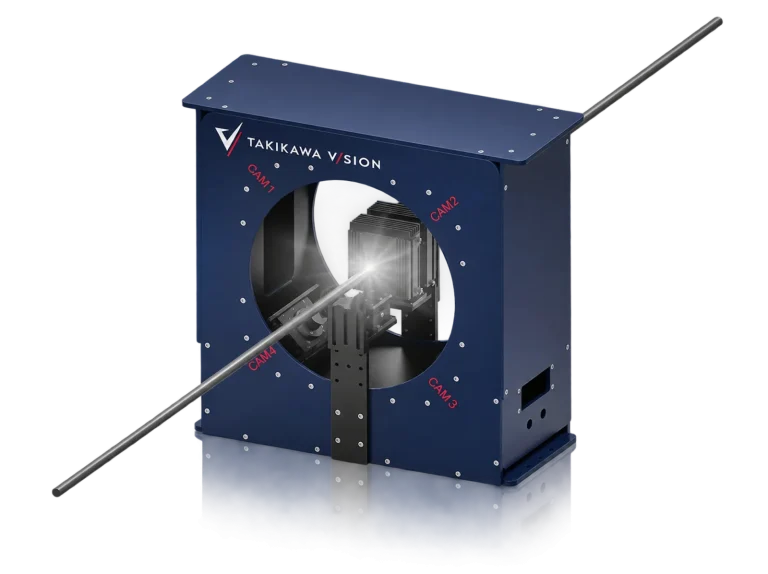
Lighting conditions are adjusted so that both the printing and surface defects show up clearly, and the full circumference is imaged. Proprietary preprocessing then suppresses the printing as a normal pattern, producing an image in which only scratches, pinholes, and lumps stand out before a judgment is made.
Key Point
With conventional surface defect detectors, printing left parts of the surface uninspected. Those parts can now be inspected.
Products used
Similar Cases
- Wire & Cable
- Installations
Detecting Small Irregularities on Black Large-Diameter Cable
- Wire & Cable
- Consultation & Testing
Detecting Insulation Weld Defects and Breaks in Flat Cable
- Plastic & Rubber (Automotive, Building Materials, Industrial)
- Installations